Our blog

OpenVidu 3.8.0: mediasoup reaches feature parity with Pion
OpenVidu 3.8.0 closes the remaining feature gap between mediasoup and Pion (RTX, DTX for Opus audio, H264/VP9/AV1 codec support) at roughly 2x Pion's performance, building on 3.6.0's DigitalOcean/Terraform support and 3.7.0's Oracle Cloud Infrastructure support.
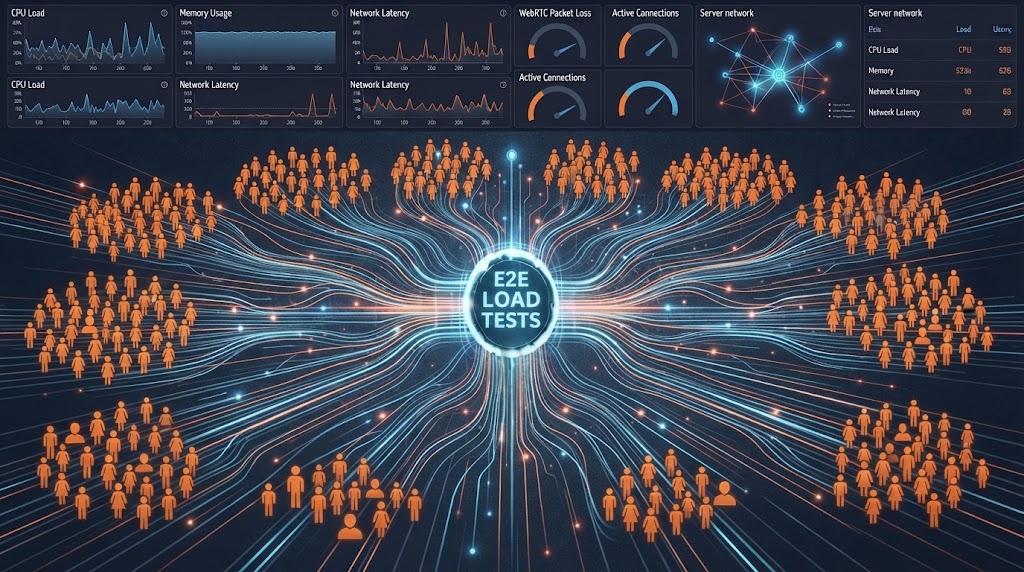
Load Testing Real-Time Applications: Why Video Calls Need More Than JMeter
Real-time applications don't fail load tests the way APIs do. Using video calls as the case study, a survey of how web apps, WebRTC, and full end-to-end user flows actually get load-tested today, where each approach falls short for a system like this, and how an ERTSA-based architecture addresses each gap without becoming a product of its own.
Streaming to Thousands: Architecting Massive-Scale Live Video Events
A real case study in a different kind of custom video problem: not a call at all, but large-scale live video distribution (a handful of active presenters, a large audience watching and participating through chat) that had to scale from a handful of viewers to thousands without paying for idle servers in between events.
OpenVidu 3.5.0: ARM and Google Cloud Platform support
OpenVidu 3.5.0 adds ARM support, expands Google Cloud Platform deployment options via Terraform templates, and updates the underlying LiveKit stack — including a fix that stops egress processes from being killed prematurely under high CPU load or poor network conditions.

Quasar Customization for Reactive, Configurable WebRTC Interfaces
What we learned customizing Quasar for a multi-tenant video-meeting application, where every WebRTC event has to show up immediately and every customer organization wants its own rules, and where Quasar made the job faster than assembling the pieces ourselves.
WebTransport and RTP-over-QUIC: What Might Come After WebRTC
We closed the last post in this series with a promise: the real bridging work between QUIC and WebRTC media is happening at the IETF, not inside any product. Here's what that work actually looks like today — WebTransport, RTP-over-QUIC, and Media over QUIC — and an honest account of how far each one has actually gotten, not just what it might eventually enable.