Designing an Elastic, Container-Based Infrastructure for a Growing Webinar Platform
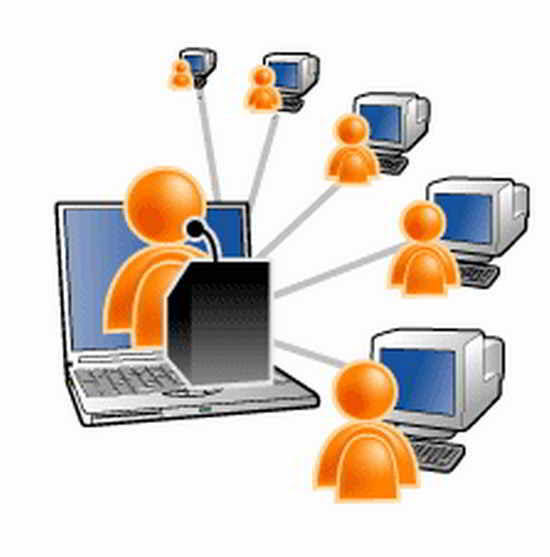
Designing an elastic, container-based fleet of cloud machines to replace the costly, slow-to-scale in-house servers a growing webinar platform had outgrown.
Context
The client's webinar product was outgrowing the infrastructure it ran on. In-house servers were expensive to maintain and slow to expand; every real burst of demand meant a genuinely slow, costly provisioning cycle. For a product still actively growing, that wasn't just an operational annoyance; it was a real risk to the sustainability of the business model itself.
The project
- Design the platform's hosting on AWS EC2 from the ground up, using large instances capable of running several concurrent webinar sessions each.
- Package the webinar service in Docker containers, and adopt the newly announced Docker Swarm to cluster those containers across the EC2 fleet.
- Build a custom control service (internally, "the master") on top of that cluster: for every webinar, decide which machine should run its container; watch real demand and launch a new EC2 instance whenever the cluster's actual capacity ran low.
- Handle teardown just as carefully. When a webinar ends, its container is removed, and the master checks whether a machine has gone idle. An idle machine isn't powered off immediately; it's first marked for deletion, a quarantine state that stops any new webinar from being placed on it, and only actually terminated once everything already running on it has finished, avoiding a machine getting shut down mid-webinar.
Our role
- Designing the master control service: placement, scale-up, and safe scale-down logic.
- Integrating Docker Swarm as the clustering layer across the EC2 fleet, a genuinely new, still-maturing tool.
- Designing and building the client's new hosting architecture, replacing in-house servers without disrupting a growing, already-live product.
Technologies
- AWS EC2, large instances running multiple concurrent webinar sessions each.
- Docker, for packaging the webinar service itself.
- Docker Swarm, for clustering containers across the EC2 fleet.
- A custom control service, for demand-driven placement and machine lifecycle management.
Conclusion and lessons learnt
The real shift here wasn't moving to the cloud on its own; plenty of products do that and still run on a fixed-size fleet sized for their worst day. It was treating capacity itself as something the system reasoned about continuously, driven by real demand rather than a number someone picked in advance, that turned a slow, capital-intensive scaling problem into something the infrastructure handled on its own.