Encrypting Recordings So the Platform Itself Can't Play Them Back
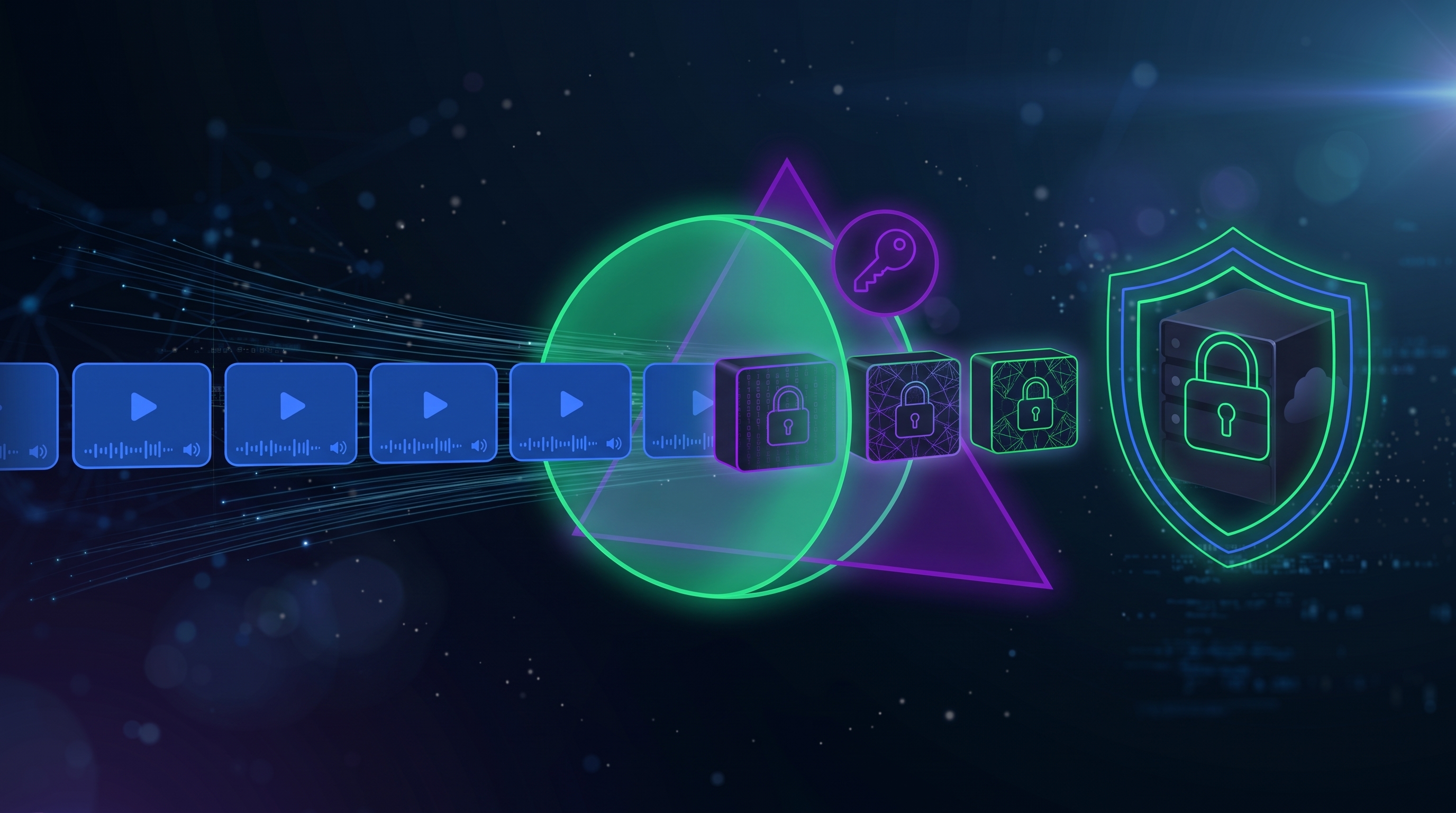
A recorded meeting is, in one sense, the simplest possible artifact: audio and video, written to a file. Encrypting it end-to-end, the way we built it for a secure video-conferencing platform on LiveKit, is a different problem than encrypting the live call itself, and it's worth walking through on its own.
Why a live call and a recording aren't the same problem
An encrypted live call only ever has to protect something in motion, between people who are all present and already holding the keys to decrypt it as it arrives. A recording has to protect something at rest, for as long as it exists, for an owner who might come back to it months later on a different device. Whoever designs this has to assume the file itself will eventually sit somewhere an attacker could reach, and that the only thing standing between them and the content is whether they have the right key.
Where the key lives, and where it doesn't
The key is generated on the client, held by whoever owns the recording, and never sent to the server in a form the server could use. That's a real constraint on the product, not a footnote: there's no "I forgot my passphrase, reset it for me" support flow, because honoring that request would mean the server could decrypt recordings on demand, which defeats the entire point. Losing the key means losing the recording. That's the trade a platform like this has to make deliberately, and say out loud, rather than quietly walk back the first time a client asks for a recovery option.
Why the recording is chunked, not one file
A meeting can run for hours, and encrypting that much video only after it's finished would mean holding the whole thing in memory, or on disk unencrypted, until the very end. Chunking it, encrypting and uploading each short segment as the meeting progresses, means the recording is never sitting around in the clear for longer than it takes to produce one chunk, and a crash or a dropped connection costs a few seconds of video, not the whole meeting.
Storage that assumes it will be asked for the wrong file
Where the chunks end up matters almost as much as how they're encrypted. They're stored in object storage that isn't reachable directly at all; nobody gets a permanent link to a recording, encrypted or not. When an authorized user wants to play one back, the platform issues a temporary, signed URL for that specific request, and nothing else is ever exposed. An encrypted file behind an open bucket is still a mistake worth avoiding on its own terms, independently of the encryption doing its job.
What this doesn't solve
None of this says anything about who's allowed to start a recording, or whether participants were told one was happening, questions a platform handling judicial or healthcare sessions has to answer somewhere else entirely. What it does guarantee is narrower and, we think, more durable: once a recording exists, the one copy of it that matters is the one its owner can open, and nobody else's.