Finishing What LiveKit Starts: MLS and Identity for Real E2EE
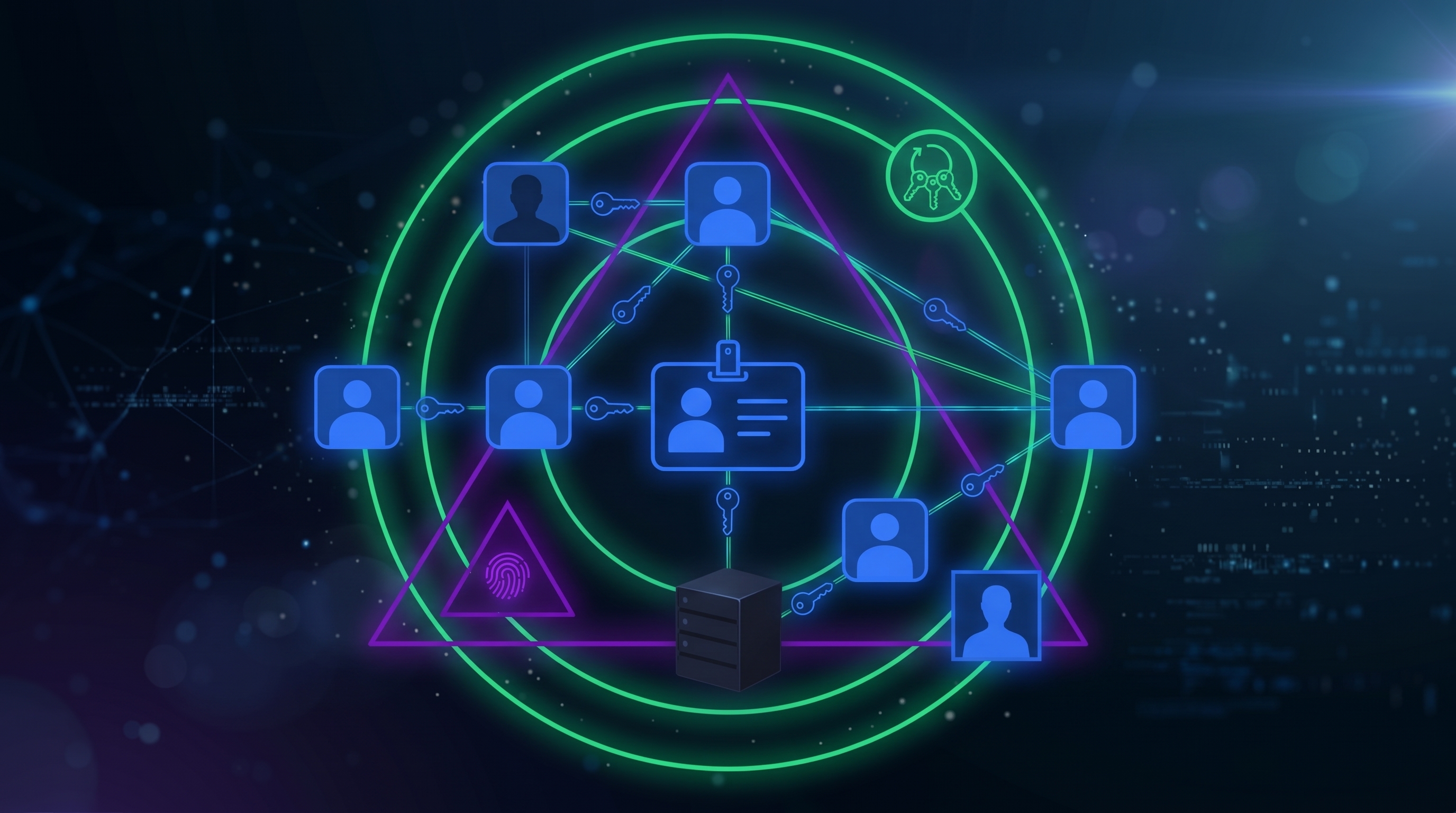
LiveKit supports end-to-end encryption out of the box, and it's tempting to read that as the hard part already done. It isn't. What LiveKit gives you is the mechanism for encrypting media once everyone in the room already agrees on a key; it doesn't tell you how that key gets distributed safely, or how you know the person joining is who they claim to be. Both of those were the actual work behind the secure video-conferencing platform we built this for.
Borrowing a protocol built for something else
Key distribution runs on MLS (Messaging Layer Security), a protocol designed for end-to-end encrypted group messaging, not video calls. That's a deliberate reuse, not a coincidence: a meeting's participants are a group that changes over time the same way a chat's membership does, people join, people leave, and whoever's left needs a shared key that accounts for exactly that membership at every moment. MLS already solves that problem properly, including the parts that are easy to get wrong by hand, like making sure someone who's left a session can't still decrypt what's said after they're gone. Once it's there, encrypting chat messages and shared files with the same mechanism is close to free.
A key the server is never allowed to see
The result is a server that genuinely cannot read the meeting it's carrying. Key management happens entirely inside each participant's browser; the server's job is limited to moving encrypted bytes between people who already have what they need to decrypt them. That's a stronger claim than "the connection is encrypted," and it's only true if nothing anywhere in the stack ever needs the server to hold a key, which is exactly what ruled out letting unauthenticated guests or SIP endpoints into an encrypted session: both would have needed the server to do something with keys it was never supposed to touch.
Knowing who's there
Encryption answers "can anyone eavesdrop." It says nothing about whether the person joining is who the meeting invite thinks they are, which is where OIDC comes in, deliberately kept on its own, dedicated identity flow rather than reusing the platform's regular login. Each identity check is requested with a fresh, random nonce, and the token that comes back is validated against that exact nonce before anyone is let in, specifically so a captured token from a previous login can't be replayed to join a session it was never meant for. A compromise of this flow also can't reach anything the main login protects, and the reverse holds too, since the two were never the same application to begin with.
What this bought, and what it cost
MLS wasn't in the platform's original design, and bolting it on afterward forced real decisions rather than configuration options: no guests in encrypted sessions, no SIP in encrypted sessions, full stop. Neither was a compromise we could quietly walk back once encryption shipped; both are direct consequences of a server that genuinely never holds a key. We think that's the right trade for a platform whose whole premise is that the operator can't see the content, but it's worth naming plainly rather than discovering it as a support ticket later.