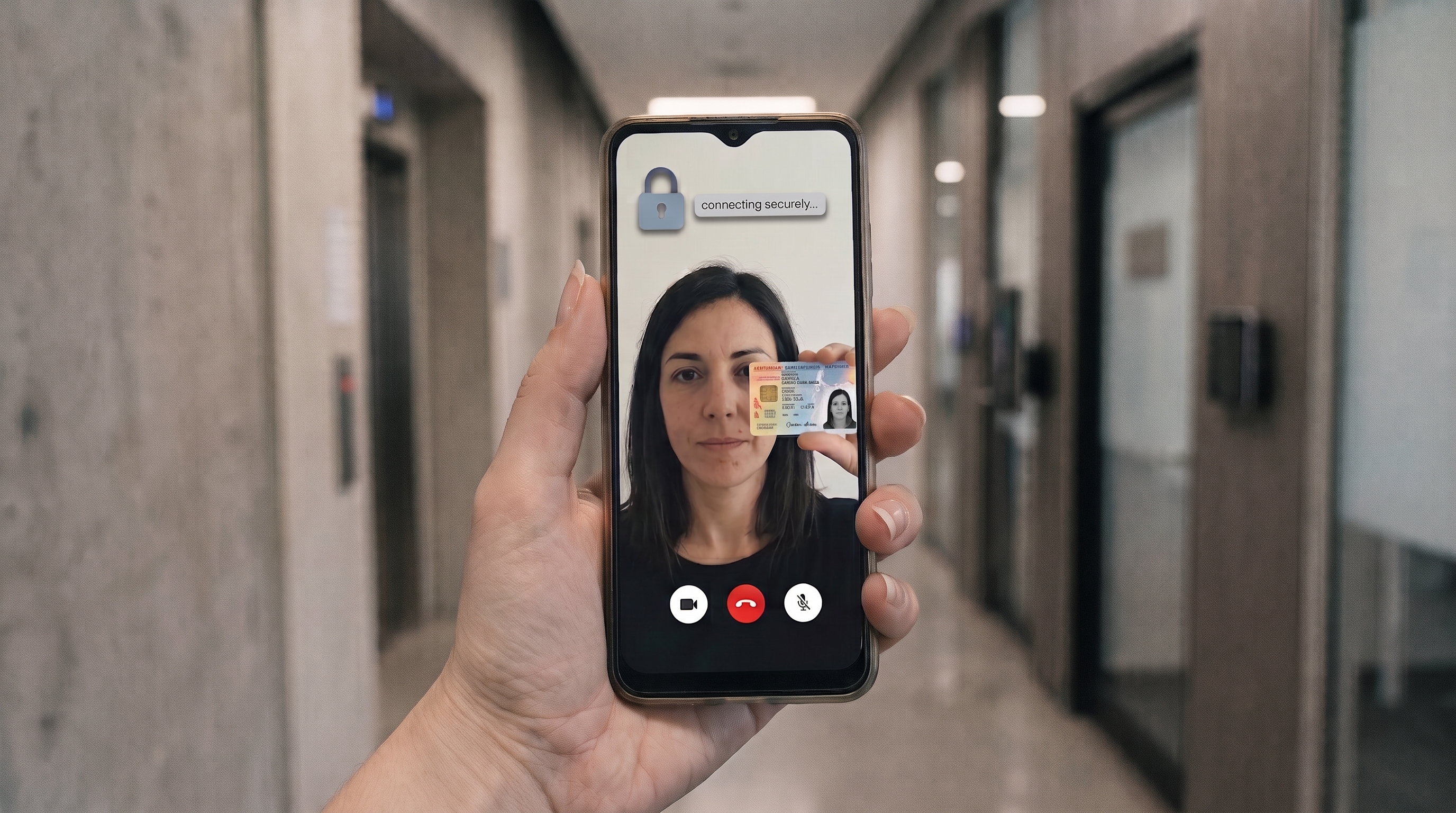
Migrating Inetum Digital Onboarding's Proof-of-Life Check to OpenVidu
Case StudyOpenViduIdentity VerificationSecurityThe original Kurento-based system had already proved the idea worked in production. Turning it into a feature of Inetum Digital Onboarding, a SaaS product regulated businesses with strict security requirements run their onboarding on, meant rebuilding it for a much larger scale: a locked-down network, and a far wider spread of applicant devices than the first version ever had to handle.
Context
Inetum Digital Onboarding (the product Iecisa had been building when Naeva Tec provided Kurento consultancy on its first video-identification system) needed its video-based proof-of-life check to scale into a piece of infrastructure that regulated clients — typically operating under strict security requirements, banking among them — could run across a much larger, more demanding production footprint. That meant designing for constraints the first system's scale never forced: the applicant's video call now had to survive whatever network a security-conscious client's own team would permit, and whatever device an actual customer happened to be holding.
The project
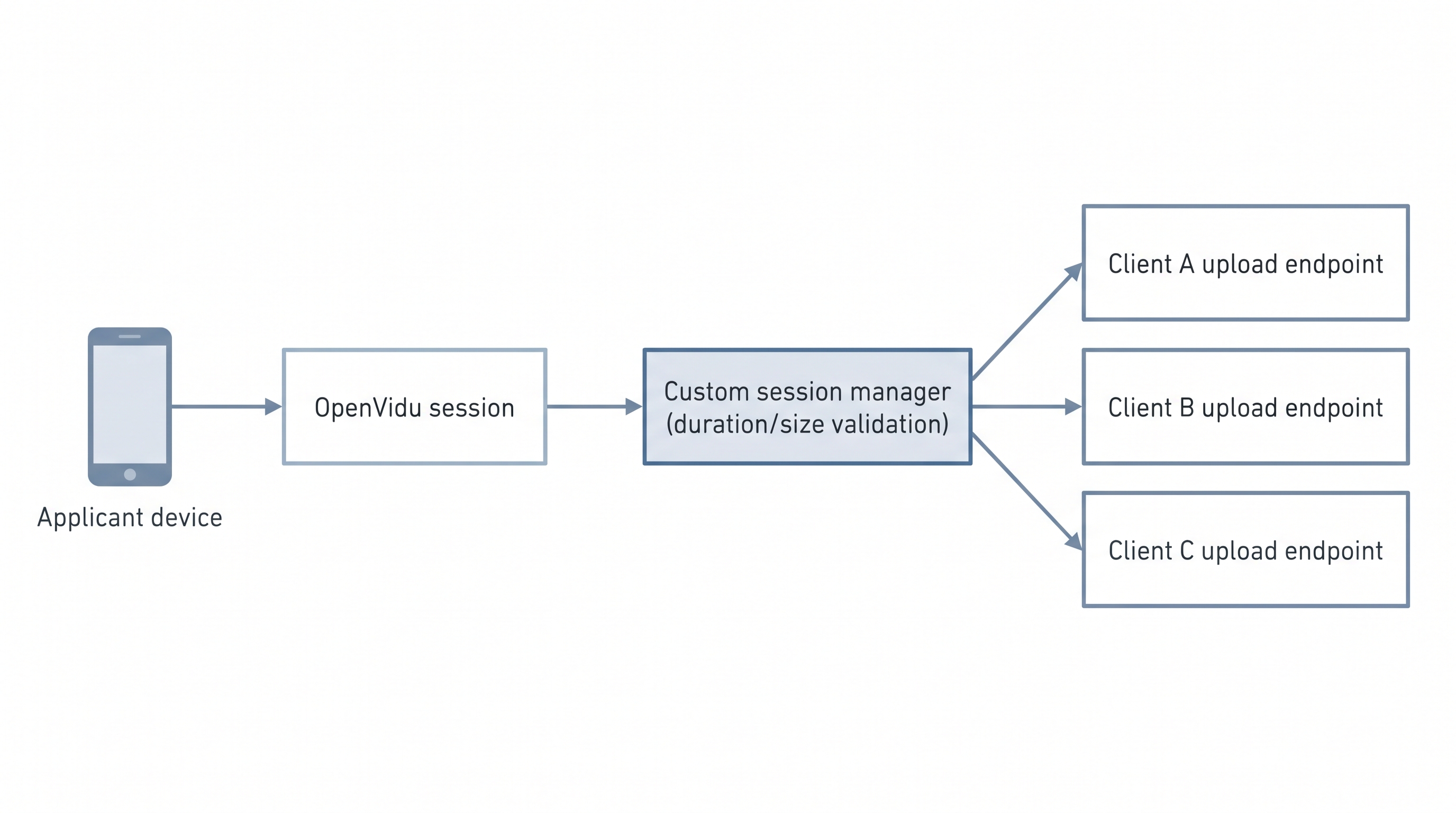
We migrated the video layer from Kurento to OpenVidu, and this time Naeva Tec's role went well beyond consultancy on OpenVidu itself. We built a custom session manager that handled the full lifecycle: opening and closing OpenVidu sessions, receiving the resulting recordings, running basic validation on each one (duration, file size), and routing the validated recording to whichever upload endpoint a given client's configuration pointed to — different clients, different downstream systems. That manager is what let video be dropped into the wider onboarding process as one configurable step, instead of something every integration had to handle by hand.
Two constraints shaped most of the real engineering work. First, the product had to run inside its clients' own strict, security-locked network policies — the kind of restriction found in banking, age verification, or anywhere else that handles sensitive personal data — which meant configuring OpenVidu for a minimum exposure surface rather than its default, more permissive setup. Second, applicants connect from whatever they own — a wide spread of devices and network conditions, including slow connections and genuinely obsolete mobile OS versions — so both the client application and the video pipeline itself had to be optimized hard, with no assumption of a modern device or a good connection.
This also isn't a video call in the sense OpenVidu is usually used for; it's a one-sided capture of evidence, and that evidence needs to hold up. Video was the one requirement that couldn't be relaxed — a connection that came up without it was invalid, not just degraded — while a missing audio track was fine, a small, almost backwards detail next to everything else this product changed about a normal video call. The project also included basic checks aimed at catching the obvious ways someone might try to fake it, like feeding a prerecorded video directly into the WebRTC pipeline instead of showing a real, live camera. These checks were simple, not foolproof, but the client reviewed and accepted them as a reasonable bar for this stage of the product.
Our role
- Migrating the proof-of-life video pipeline from the original Kurento system to OpenVidu.
- Building the custom session manager: OpenVidu session lifecycle, recording retrieval, duration/size validation, and routing to per-client upload endpoints.
- Hardening the OpenVidu deployment for a minimum-exposure configuration compatible with strict, security-locked network policies.
- Optimizing the client application and video pipeline for a wide range of real-world devices and network conditions, including low-bandwidth connections and outdated mobile software.
- Implementing basic checks to flag non-live camera feeds, within the limits the client accepted for this stage of the product.
Technologies
- OpenVidu, for the video session layer, configured for minimum exposure in a strict security context.
- A custom session and upload manager, for OpenVidu session lifecycle, recording validation, and multi-endpoint routing.
- Client-side and pipeline optimizations targeting low-end devices and poor network conditions.
Conclusion and lessons learnt
The biggest adjustment wasn't technical in the usual sense, it was recognizing how different this use case was from a normal video call. Designing for a strict, security-locked network's restrictions instead of an open internet connection, treating video as the one truly non-negotiable requirement, and accepting an imperfect but genuinely useful anti-spoofing check all came from the same realization: this product's job is to produce evidence, not to let two people talk. Once that was the frame, decisions that would look backwards for a normal conferencing product — strip the network surface down, flag suspicious feeds even without a perfect answer — were exactly the right ones. We go deeper into some of those decisions, plus a few improvements worth considering for a similar product today, in a companion post.